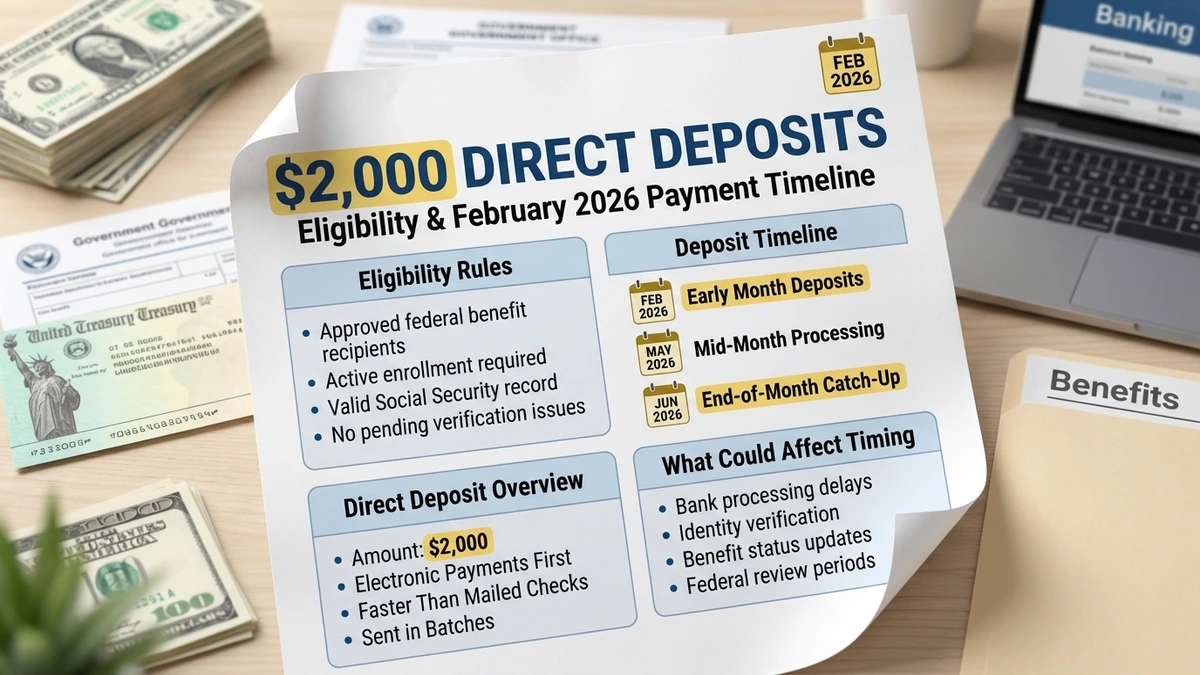
As 2026 begins, many American families are under financial pressure. The holiday season often leaves higher credit card balances, and rising costs for rent, groceries, utilities, and healthcare continue into the new year. In this climate, reports about a possible $2,000 IRS-related direct deposit have spread quickly. For households trying to regain financial balance, the idea of a one-time payment feels both hopeful and urgent.
What the $2,000 IRS Payment Is Said to Be
The $2,000 direct deposit being discussed is described as a one-time financial relief payment. It is not the same as a tax refund and is not part of regular benefit programs. Instead, it is presented as temporary support aimed at helping households manage early-year expenses and ongoing cost-of-living challenges. Importantly, this payment has not been officially confirmed, and no final authorization has been announced.
How the IRS Would Issue the Payment
If such a payment were approved, the IRS would likely rely on existing tax records. Income, filing status, and residency information from recent tax returns would be used to determine eligibility. This approach would allow payments to be issued automatically, without requiring most people to submit new forms or applications. Direct deposit information already on file would be used to send funds quickly.

Who Might Qualify
Eligibility discussions generally focus on low- to middle-income households. Qualification would depend on recent tax filings, income levels, and valid identification such as a Social Security number. Married couples filing jointly could have higher income limits than single filers. Families with dependents may also fall within qualifying ranges, depending on how final rules are written.
Why Timing and Records Matter
If issued, payments would likely be sent in phases, starting with those who have direct deposit details on file. People without bank information would receive checks or prepaid debit cards by mail, which usually takes longer. Incorrect bank details, outdated addresses, or unresolved tax issues could delay delivery. Reviewing recent tax filings and keeping IRS records accurate can help avoid problems.
How This Differs From Past Stimulus Payments
Earlier stimulus payments were broad and designed for emergency situations. The 2026 proposal discussed online appears more targeted and based on existing tax data rather than universal distribution. This method limits payments to certain income groups and reduces administrative complexity, but it also means not everyone would qualify.

Why Caution Is Important
Talk of a $2,000 payment reflects ongoing financial stress rather than confirmed policy. Online claims can be misleading, and assumptions may lead to disappointment. Official confirmation would come directly from the IRS or federal announcements, not social media posts.
Disclaimer
This article is for informational purposes only and does not provide legal, tax, or financial advice. No universal $2,000 IRS direct deposit has been officially confirmed for 2026. Payment programs, eligibility rules, and timelines depend on government decisions and may change. Readers should rely on official IRS announcements or consult a qualified tax professional for guidance specific to their situation.