In early 2026, many Americans are hearing about a possible $2000 federal direct deposit. Online, it is often described as “$2000 for all,” which has caused confusion and high expectations. The discussion comes from ongoing concerns about rising living costs, household affordability, and whether the federal government should provide direct cash relief during periods of economic pressure. However, it is important to understand that this payment is still a proposal, not an approved program.
Is the $2000 Direct Deposit Approved
As of February 2026, there is no confirmed $2000 federal payment. Congress has not passed a law authorizing it, and no federal agency has announced an official rollout. What exists right now are policy discussions, draft ideas, and budget negotiations taking place in Washington. Until legislation is formally approved and signed, no payments can be issued.
How a Payment Would Be Issued If Approved
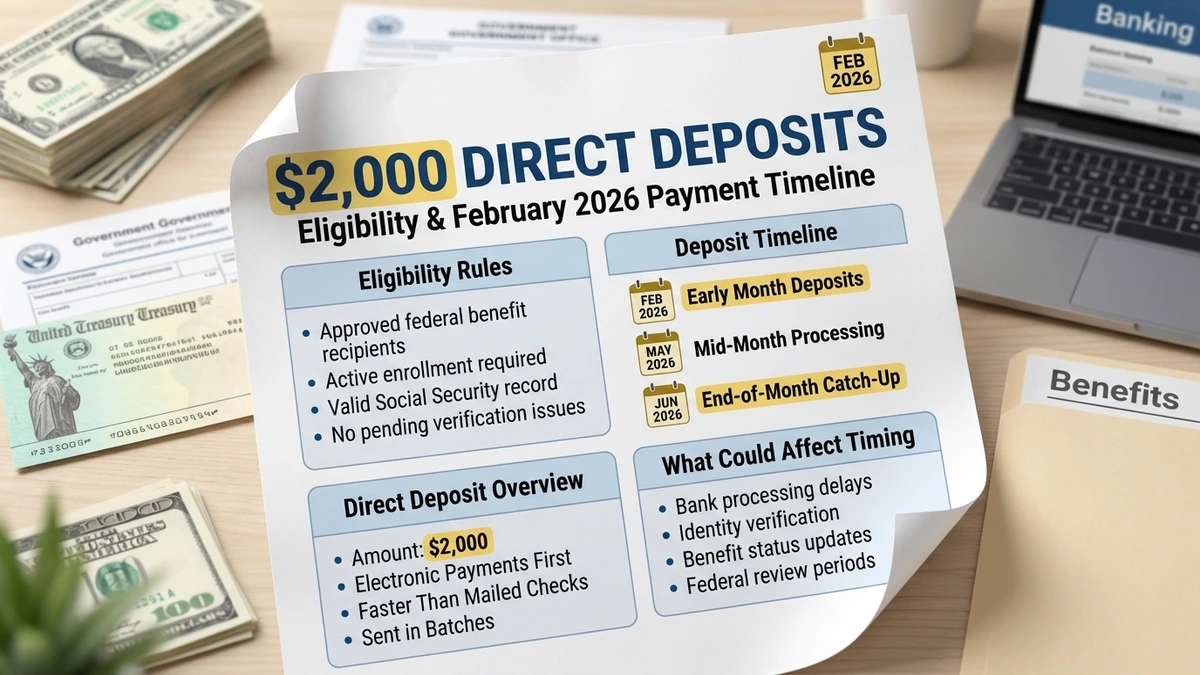
If Congress were to approve a $2000 direct deposit, the federal government would likely use existing systems to deliver the money. Direct deposit would be the fastest option, using bank information already on file with the IRS or Social Security Administration. People without direct deposit information could receive a mailed check or, in some cases, a prepaid debit card. These methods would take longer to reach recipients.

Who Might Qualify for the Payment
Eligibility is one of the biggest points of debate. Some proposals suggest a universal payment, while others include income limits similar to earlier stimulus programs. Seniors, Social Security recipients, SSI and SSDI beneficiaries are generally included in most drafts. Final eligibility rules would depend entirely on the wording of the law passed by Congress.
Would the $2000 Be Taxable or Affect Benefits
Most proposals state that the $2000 payment would not count as taxable income. Current drafts also suggest that it would not reduce Social Security, SSI, or SSDI benefits. However, these protections would need to be clearly written into the final legislation before becoming official.
Avoiding Misinformation and Scams
Claims that payments are already approved or that applications are open are incorrect. Federal agencies do not charge fees or ask for personal information through unsolicited calls, emails, or messages. Official updates would come directly from government announcements, not social media posts.

What to Do Right Now
At this stage, no action is required. The best approach is to stay informed through official federal sources and remain cautious of headlines promising guaranteed payments. If the proposal becomes law, the government would provide clear instructions.
Disclaimer
This article is for informational purposes only and does not provide financial, legal, or tax advice. Federal payment programs, eligibility rules, and timelines are subject to legislative approval and may change. Readers should rely on official government announcements or consult a qualified professional for guidance specific to their situation.