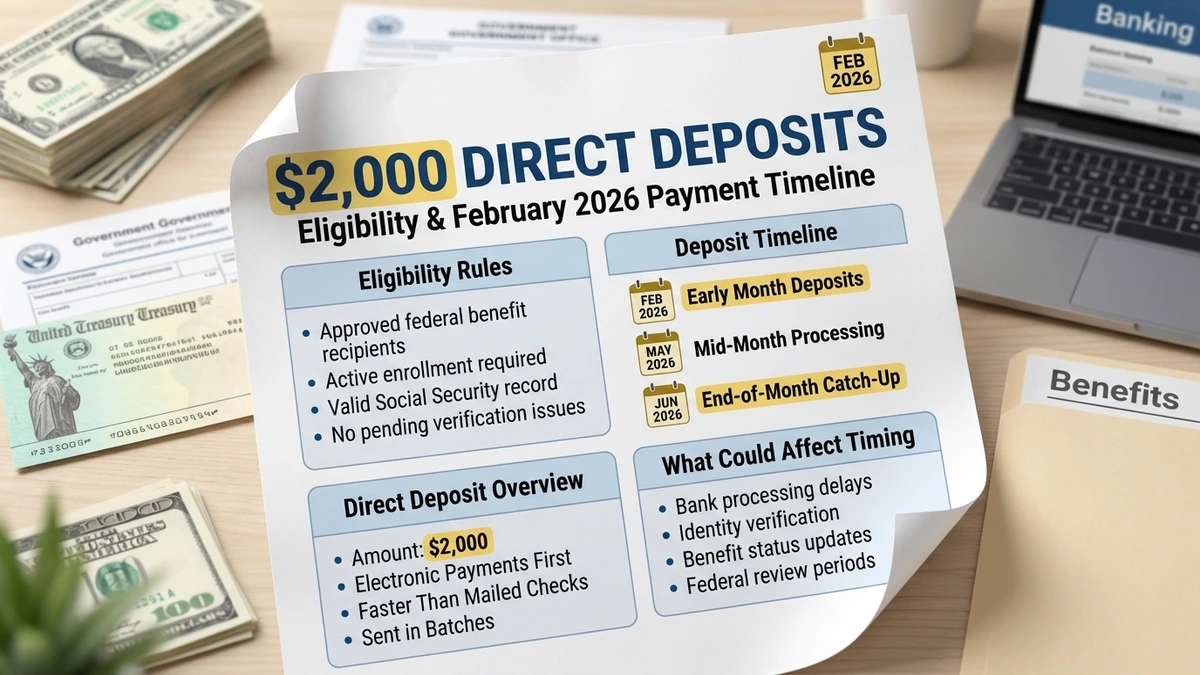
As 2026 begins, conversations about possible $2,000 direct deposits have gained strong public attention. Many Americans are dealing with higher rent, costly groceries, and increasing medical bills. In this environment, the idea of extra federal money arriving early in the year feels comforting. Online headlines and social media posts have added to this excitement, often suggesting that a new nationwide payment has been approved.
Why January Payments Create Confusion
The reality behind these discussions is more complex. There is no newly approved stimulus or universal federal payment program starting in early 2026. Instead, what people are noticing is the timing of existing payments. January is a month when several federal programs adjust benefits, apply annual increases, and begin new payment cycles. When these payments arrive close together, the total amount may appear larger than usual.

The $2,000 figure stands out because it feels meaningful during financial pressure. Even though inflation has slowed overall, essential expenses remain high. As a result, any mention of federal money spreads quickly, especially when short online posts leave out important context.
Where These Payments Actually Come From
Payments close to $2,000 are tied to long-standing federal programs, not new laws. These include Social Security retirement benefits, Supplemental Security Income, Social Security Disability Insurance, veterans’ benefits, and tax refunds or refundable credits. When two or more of these payments arrive within a short period, the combined amount may approach $2,000 for some people.

There is no separate application for these deposits. Eligibility and payment amounts are determined by each program’s existing rules. Nothing new has been launched specifically for 2026.
Who May See Higher Deposits
Not everyone will receive payments near $2,000. Those more likely to see larger amounts include Social Security beneficiaries with higher earnings histories, married couples receiving combined benefits, veterans with qualifying compensation, and individuals who file taxes early and receive refundable credits. Payment amounts differ widely based on income history, eligibility rules, and filing details.

Why Payments Are Not the Same for Everyone
Federal benefit programs are designed to be individual-based. Social Security depends on lifetime earnings and retirement age. Disability benefits follow medical and work credit rules. Tax refunds vary by income, withholding, and credits. Because of this, payment amounts naturally differ. Similar totals are often the result of timing, not policy.
Managing Expectations Moving Forward

There is currently no indication of a universal $2,000 stimulus payment for all Americans in early 2026. Future relief, if any, is more likely to come through targeted adjustments rather than blanket payouts. Relying on official government sources helps avoid misinformation and financial stress.
Disclaimer
This article is for informational purposes only and does not confirm a universal $2,000 payment for all Americans. Payment amounts, eligibility, and timelines depend on individual circumstances and official federal policies, which may change. Readers should rely on official government announcements or consult qualified professionals for guidance specific to their situation.